Wednesday, June 17, 2020

If You Would Ask Us Our Ambition.

There are people who ask us about our ambition and we would have simply smile at their innocence because we know they won't stand our desires.

There are  kind of people who have seen time change and revolutions occur and cities fall and kings were overthrown and they'd tell you how Shakespeare started to write. How Hitler was once at the verge of dying but became the reason for deaths, not one, not hundred but five lakh ninety three thousand and nine hundred and more. How Kepler would have not given the laws of planetary motion if he didn't revolve around my two-storey house, every evening with flowers in one hand and " The Tempest" in other and called us Sirius, the brightest star, he was wrong.

We are the Sun, center of the entire universe.

If you ask us our ambition, we'd tell you a tale where the evolution really never occurred and yet there we were, the most beautiful of all the things ever created.

We started the Trojan war and at last, if you ask us our ambitions, we'd tell you we want to be writers.

By: Syed Aayaan Asif

About the author: The old school soul living in the modern times. Entrepreneur by profession and writer by ardency.


Sunday, June 14, 2020

Wizard publisher latest news

[Breaking News] June 14 LIVE Updates: Latest Telangana And Andhra Pradesh News 
Wizard times 
   |  14 Jun 2020 9:18 AM IST Andhra Pradesh & Telangana Updates from The Hans India on 15 June HIGHLIGHTS Breaking News Today, 14 June 2020: The Hans India blog provides you the breaking news from India & the World. You can find all the latest news from... Breaking News Today, 14 June 2020: The Hans India blog provides you the breaking news from India & the World. You can find all the latest news from Andhra Pradesh and Telangana as they break. Weather in Hyderabad will be 31 Degree during the day and 24 Degree during the night. Sunrise in Hyderabad will be at 5:42AM and will set at 6:41PM. Humidity in Hyderabad on June 14 will be 78% and Air Quality will be Excellent with 14 AQI. Weather in Vijayawada will be 36 Degree during the day and 28 Degree during the night. Sunrise in Vijayawada will be at 5:34AM and will set at 6:40PM. Humidity in Vijayawada on June 14 will be 55% and Air Quality will be Fair with 21 AQI. Live Updates 14 Jun 2020 8:51 PM IST Earthquake in Gujarat: National Center for Seismology (NCS) after a review has ascertained that magnitude of the earthquake was 5.5 on the Richter scale. ANI 14 Jun 2020 8:34 PM IST Earthquake in Gujarat: An earthquake of magnitude 5.8 struck 122 km north-northwest (NNW) of Rajkot, Gujarat at 8:13 pm today: National Center for Seismology (NCS)  14 Jun 2020 5:07 PM IST Amit Shah orders transfer of four IAS officers to Delhi New Delhi: Home Minister Amit Shah has directed immediate transfer of four IAS officers - Awanish Kumar and Monica Priyadarshini from Andaman and Nicobar, and Gaurav Singh Rajawat and Vikram Singh Mallik from Arunachal Pradesh to New Delhi to assist in the management of COVID-19. The Home Minister also directed attachment to Delhi Government of two senior IAS officers - SCL Das and SS Yadav from Centre. 14 Jun 2020 2:02 PM IST Centre to provide 500 railway coaches to Delhi amid shortage of beds The Centre will provide 500 railway coaches to Delhi in view of shortage of beds for COVID-19 patients, Home Minister Amit Shah announced after a meeting with Delhi Chief Minister Arvind Kejriwal. "These railway coaches will not only increase the number of beds in Delhi by 8,000, but these coaches will also be equipped with all facilities to fight COVID-19.” 14 Jun 2020 1:57 PM IST Five senior Central govt officer to assist Delhi officials Amit Shah To help Delhi fight the spike in coronavirus cases, five senior officers of the government of India will assist the Delhi government, Home Minister Amit Shah announced. Moreover, scout guides, NCC and NSS cadets and members of other voluntary organisations will be asked to volunteer for health services during the pandemic. 14 Jun 2020 12:40 PM IST Coronavirus in Visakhapatnam: As per the state health department, a four-month-old baby in Andhra Pradesh has recovered from COVID-19 after being on ventilator for 18 days in Visakhapatnam. Read Full Story 14 Jun 2020 12:39 PM IST Telangana News: After the TRS MLA Muthireddy Yadagiri Reddy tested positive for coronavirus, four others including his wife, cook, driver and gunman were found to be infected with the coronavirus. All were shifted to the private hospital for treatment. Read Full Story 14 Jun 2020 12:38 PM IST Andhra Pradesh News: It is a known fact that the government of Andhra Pradesh has granted permission for the resumption of temples from 8th of this month. However, it has postponed the situation at Srikalahasti. While in the latest development, the authorities have made arrangements to commence the darshans at Srikalahasti from Monday morning i.e June 15. Read Full Story 14 Jun 2020 11:10 AM IST Akbaruddin Owaisi, the floor leader of All India Majlis-e-Ittehadul Muslimeen (AIMIM) and MLA from Chandrayangutta is celebrating his birthday today. Read Full Story 14 Jun 2020 11:07 AM IST AP cabinet will approve the Annual Financial statement and Appropriation Bills on June 16, before commencing the Budget session. Cabinet meet scheduled at 9am

https://www.thehansindia.com/live-updates/breaking-news-june-14-live-updates-latest-telangana-and-andhra-pradesh-news-627954?infinitescroll=1

Saturday, June 13, 2020

Despite Battling COVID Misinformation, Community Radio News Still Seen as 'Security Threat'

Even though community radio voices come from the community and are trusted by locals, the government says there would be a "security risk" if they start providing news.
Saiyed Junaid
In his first recorded interaction with community radio stations a few weeks back, minister for information and broadcasting Prakash Javadekar acknowledged the valuable contribution of community radio stations in spreading awareness amongst communities on COVID-19.
He called them ‘agents of change’ and said they have the power to influence opinions, change behaviour and inform communities that reside in their catchment area, typically around a radius of 15 kilometres. Javadekar could not have explained the role of community radio better.
However, despite acknowledging the role that community radio has played in the past, as well during the extremely challenging situation posed by the outbreak of the coronavirus, the government’s Policy Guidelines for Community Radio Stations, 2006, bans them from broadcasting news and current affairs – not even local news.
A PIL was filed in 2013 by Common Cause seeking permission for private and community radio stations to broadcast news. The argument presented by senior advocate Prashant Bhushan was that preventing private and community radio stations from broadcasting news was a violation of the Supreme Court’s landmark verdict in 1995 in the Ministry of Information & Broadcasting vs  Cricket Association of Bengal.
The court had then held that ‘airwaves are public property to be used to promote public good and expressing a plurality of views, opinions and ideas. This PIL came up for discussion again in 2017 before a bench that included the then Chief Justice of India J.S. Khehar and Justice D.Y. Chandrachud. They reiterated the same question: When television channels are allowed to broadcast the news, why not radio? The Supreme Court asked the government to answer this question.
Justifying its actions, the government responded by saying that allowing community radio to broadcast news could endanger ‘national security and public order’. The government further said that the broadcast of news could pose ‘possible security risk’ and may be ‘exploited’ by foreign radical outfits. Community radio and its advocates, of course, do not agree with this view.
What is community radio?
Community radio is a potent local media medium that talks about local issues to local people in a local language. It ensures involvement and participation of the community, it is the eyes and ears of the community during a disaster, and can serve as the prime vehicle for sharing information, for preparing communities and for reducing risks.
It is persuasive, flexible, speedy, influential and powerful, and derives its strength from its constant connect with communities. It is sensitive to the needs of the people and has the capacity and capability of empowering them via information. Community radio stations are a trusted source of information dissemination in some of the most remote areas of the country and have the ability to establish last mile information connectivity.
In the last three months, India’s 295 odd community radio stations have displayed immense courage and commitment. As always, they have complemented the work of the district authorities in busting myths and keeping them informed about the developments in their areas. They have broadcast bulletins, briefings of the government of India as well as the states and district collectors, chief medical officers and the police department.
The community radio stations have been, without any financial support from the state or Centre, broadcasting information on do’s and don’ts, measures to be taken to protect oneself and one’s neighbours, the need to wash hands, wear masks etc during the COVID-19 pandemic. Applying all the knowledge that they have acquired over the years building resilience amongst their communities during times of disaster, community radio has worked tirelessly to help save lives.
These stations have kept their listeners informed about containment zones, the number of positive patients, where they are being treated in the district, the areas that need to be avoided, the need to observe lockdown and more. The stations have simplified and demystified the complex advisories that have been coming almost every day from the Centre, state and district.
In the last three months, community radio stations have seen a spike in their listenership. The reason for this is that people trust their local radio stations, as they provide them with credible local informed news.
But the irony is that in playing this vital role, these stations are probably breaking the law!
Today fake news has become one of the biggest threats to democracy. Local reporters, as social actors, are verifying facts and debunking false propaganda with speed and accuracy. For the first time, they are broadcasting not only development news, and information about government schemes but ‘news’ that is essential for any citizen to stay informed and aware.
These stations are ‘Breaking News’ when they inform their listeners about the number of patients who have tested positive in their district, villages that are in the danger zone, information on the containment zones, about PDS, the opening of mandis, online classes, Jan Dhan Yojana. The radio stations are talking to banks, medical health professionals, agriculture experts, sharing information on the plight of migrant labourers, their travel arrangements, shelters, food facilities and quarantine centres.
Community radio stations are doing everything that other responsible media outlets are doing. At the risk of their own lives, the reporters are moving around, collecting stories and sharing information that is helping protect their communities. They may be struggling financially but in term of listenership, they are experiencing a boom.
The importance of community radio stations is magnified in some hilly, remote and inaccessible areas, which are barely served by the mainstream media. Photo: Reuters
A recent study, commissioned by the Association of Radio Operators for India (AROI), found that the radio industry has a listenership of 51 million people, which is nearly as much as television’s reach of 56 million and social media’s reach of 57 million. During the lockdown, radio has seen an increase of 23% in its listenership.
In any disaster, the local community is the first responder. Community radio stations have been the responders in this instance. They have been at the forefront of the fight against misinformation and are the most trusted intermediaries. Given that their reporters are not just voices but identifiable faces from within the community, they are relied upon – as locals believe they will never do anything that will bring harm to their fellow residents.
The hourly bulletins broadcast by many of these stations are much awaited, and collectors and medical officers have used this platform to reach out to the people. The question that arises then is that have they been violating the code of ethics? Have they been broadcasting news? Should they be penalised for this? It would be absurd if that were to happen. They have done what they are best at – developing and broadcasting content that has met the needs of the people in these difficult times. They have prevented not only the spread of the disease but also panic and fear.
If the minister really means what he says, then he should ensure that his ministry secures the survival of local stations so that they are able to continue their work. He should check out media reports on the work being done by community radio stations – be it during HudHud, Amphan or Nisaraga or drought or hailstorms, and more.
He should also inquire about the role that community radio stations have played in creating voter awareness, in reaching out to communities to simplify the Sustainable Development Goals, and for their contribution to POSHAN Maah, Indradhanush and Swachh Bharat.
The minister should take steps to ensure that this form of hyper-local media is supported financially, should haul up DAVP (BOC) for not paying the community radio stations for the campaigns broadcasts on these stations and should ask every ministry to include community radio in their media plans.
He should set up a stakeholder group to review the government’s restrictive policy guidelines for community radio, allow sponsorship from agencies other than the government, and revamp the cumbersome licensing process. In brief, community radio is a people’s media and it’s time for the Ministry of Information and Broadcasting and the Ministry of Communication and IT to unshackle it from all restrictions that are detrimental to its growth and sustainability.
Saiyed Junaid  is the director of  Wizard's Delhi  , 

Friday, June 12, 2020


China’s ‘mask diplomacy’ and Silk Road investments may make all the difference if there’s a cold war with the US 

Thursday, June 11, 2020


World Day Against Child Labour 2020 : Give girls a chance


The World Day Against Child Labour will be celebrated on 12 June 2009. The World Day this year marks the tenth anniversary of the adoption of the landmark ILO Convention No. 182, which addresses the need for action to tackle the worst forms of child labour. Whilst celebrating progress made during the past ten years, the World Day will highlight the continuing challenges, with a focus on exploitation of girls in child labour.
Around the world, an estimated 100 million girls are involved in child labour. Many of these girls undertake similar types of work as boys, but often also endure additional hardships and face extra risks. Moreover, girls are all too often exposed to some of the worst forms of child labour, often in hidden work situations.
On this World Day we call for:
  • Policy responses to address the causes of child labour, paying particular attention to the situation of girls.
  • Urgent action to tackle the worst forms of child labour.
  • Greater attention to the education and skills training needs of adolescent girls - a key action point in tackling child labour and providing a pathway for girls to gain Decent Work as adults.
Girls and child labour
ILO standards require that countries establish a minimum age of employment (generally 15 though developing countries can set the age at 14). They also require that children (including adolescents aged 15-17) are not involved in work designated as a worst form of child labour.
However in many countries of the world, girls below the minimum age of employment can be found working in a wide range of occupational sectors and services and often in the worst forms of child labour.
Large numbers of young girls labour in agriculture and in the manufacturing sector, frequently working in dangerous conditions. A major sector of employment for young girls is domestic work in third party households. Oftentimes this work is hidden from the public eye, leading to particular dangers and risks. The extreme exploitation of girls in the worst forms of child labour includes slavery, bonded labour, prostitution and pornography.
Girls face multiple disadvantages
Most child labour is rooted in poverty, often associated with multiple disadvantage. Socio-economic inequalities based on language, race, disability and rural-urban differences remain deeply entrenched. Girls can face particular disadvantages due to discrimination and practices which allocate certain forms of work to girls. Many girls take on unpaid household work for their families, usually more so than boys. This work may include childcare, cooking, cleaning, and fetching water and fuel. Girls often also have to combine long hours of household chores with some form of economic activity outside the household presenting girls with a “double burden”. This can have a negative impact on any opportunity for school attendance and can present a physical danger to girls.
Girls still disadvantaged in education
Millennium Development Goal 2 calls for all children to complete a full course of primary education by 2015. Millennium Development Goal 3 has a target of eliminating gender disparity both in primary and secondary education. However globally some 75 million children are still not enrolled in primary school. For every 100 boys in school, there are only 94 girls and girls in rural areas are particularly disadvantaged. Gross enrolment at secondary level in developing countries is 61% for boys and 57% for girls. In least developed countries the figures are 32% for boys and 26% for girls. It is clear that in much of the developing world huge numbers of girls are failing to access education at post primary level.
Girls may often be the last to be enrolled and the first to be withdrawn from schools if a family has to make a choice between sending a boy or girl to school. Girls’ access to education may also be limited by other factors, for example the safety of the journey to school or lack of adequate water and sanitation facilities.
Without access to quality education, girls drift into the labour force at an early age well below the minimum age of employment. It is therefore vital to extend secondary education and skills training for girls and to ensure that children from poor and rural households can access this provision.
Decent Work and development by educating girls
Education for a child is the first steps towards obtaining Decent Work and a decent livelihood as an adult. Research has proven that educating girls is one of the most effective ways of tackling poverty. Educated girls are more likely to have better income as adults, marry later, have fewer and healthier children, and to have decision making power within the household. They are also more likely to ensure that their own children are educated, helping to avoid future child labour. Tackling child labour among girls and promoting their right to education, is therefore an important element of broader strategies to promote development and Decent Work.
The World Day Against Child Labour
The World Day Against Child Labour aims to promote awareness and action to tackle child labour. Support for the World Day has been growing each year. In 2020  we look forward to a World Day that is widely supported by governments, employers and workers organisations, UN agencies and all those concerned with tackling child labour and promoting the rights of girls.

Wednesday, June 10, 2020

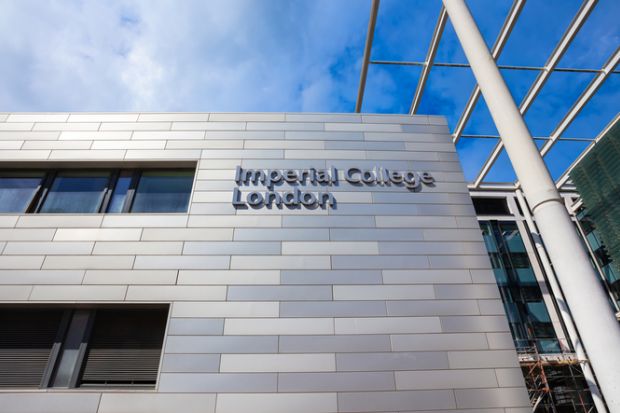
mperial Covid-19 researchers criticise plans to cut 75 ICT jobs

Members of the Imperial College Covid-19 Response Team warn against redundancies in ‘vital’ jobs
June 9, 2020
Source: iStock
Imperial College London has told staff it expects to make 75 staff in the ICT department redundant, with coronavirus researchers warning the move could harm their work.
In a “white paper for staff consultation”, the university set out how changes to “the ways of working, management structure, roles and staffing” will save the university around £2.7 million following an eight-month restructure.
The plans will affect 156 members of the 281 staff in the ICT department, as they will be asked to apply or compete for roles “either internally and in some instances against applicants both internally and externally”.
The university said it expects 75 staff will be then made redundant, although “will work to keep this number to a minimum”, following the consultation period.
According to the document, the college can “only operate effectively when relevant underlying ICT technology, people and process capabilities are in place, planned and delivered in collaboration with the wider college, in an optimal manner”. It said that current “inefficient structures and processes result in suboptimal services being delivered to the College”.
There will be an opportunity to be considered for voluntary redundancy until 31 July 2020, after which there will be a compulsory redundancy process.
One academic told Times Higher Education they were “horrified” by the plans: “This has been rushed through to the point of being reckless. It is an important department – especially now – and this will directly affect Covid-19 research.”
Members of the Imperial College Covid-19 Response Team, which has been advising government on how to respond to the pandemic and working on modelling of the spread of coronavirus, also condemned the plans.
Team member Samir Bhatt, a senior lecturer in the faculty of medicine, said that for weeks “all of our Covid-19 response work has had to be done remotely. It goes without saying that our work is of significant public health importance, both within the UK and around the world, and it would have been impossible without the Imperial ICT staff and their heroic efforts in the midst of incredibly trying circumstances.”
Another member of the team, Seth Flaxman, a senior lecturer in statistical machine learning, said that “my team has published a major paper in Nature quantifying lives saved by lockdown, for which we relied heavily on specialised computing services supported by Imperial's ICT staff.”
UCU general secretary Jo Grady said it was “incredible” that Imperial would “risk undermining the fight against Covid-19” through the redundancies. “We want to work with Imperial and make the case for government to provide the funding the sector needs, but we will fight to keep every member of staff,” she said.
An Imperial spokeswoman said: “We are reforming our Information Technology Services to provide the best support for our world-class research and education. Our Covid-19 Response Team will continue to receive first-rate ICT support. We are simplifying some processes and adopting a structure that makes it easier for us to respond quickly to the changing needs of our researchers and students.

Tuesday, June 9, 2020

Removed 1983 PTI no relief from High Court, withdraw the application, now will go to Supreme Court again. this Rest less 

                     Sirsa | Female teacher got her hair cut in protest.

  • Punjab and Haryana High Court refuses to stay on Supreme Court orders
  • The state government said earlier - did not relieve, now gave affidavit in High Court

Wizard Publisher Jun 10, 2020, 07:35 AM IST
Ambala The 1983 PTI-DPE, recruited in 2010 and removed after the Supreme Court, has not received relief from the Punjab and Haryana High Court. On Tuesday, the High Court refused to grant a stay on the orders of the Supreme Court in the case. The court ordered PTI to withdraw the case. Now PTI will move the Supreme Court. A petition will be filed against the relieving in the Supreme Court. Earlier in the Supreme Court, PTI had also filed a petition for review. 
The state government earlier said - did not relieve, now gave affidavit in the High Court,
around May 31, the Education Department started to relieve 1983 PTI across the state. The Haryana Physical Education Teachers Association filed a petition in the High Court against these relieving orders. At that time, the government had given an affidavit in the High Court that PTI has not yet been relieved, while on 9 June the government gave an affidavit again that there was confusion due to Miss Communication at that time, PTI has been relieved. After the hearing, the High Court directed PTI to withdraw the case.
Now PTI will file a petition in the Supreme Court. 54 PTIs were appointed in Ambala. Of them, 25 PTIs were promoted to become DPEs while 2 PTIs have died. Haryana Physical Education Teachers Association President Gurdev Singh said that the High Court has asked to withdraw the case citing the orders of the Supreme Court. Now he will move the Supreme Court against the government's relieving order. 
Teachers were recruited in the year 2010: The Haryana Staff Selection Commission had recruited 1983 PTI across the state in April 2010, but among the candidates who failed in the appointment, Sanjeev Kumar, District Ram and others filed a petition in the High Court alleging malpractices in the appointment. Was challenged. It was said that appointment was also given to such candidates whose educational documents are fake. The High Court's single bench hearing the petition had quashed the recruitment of PTI.

Happy Republic Day